
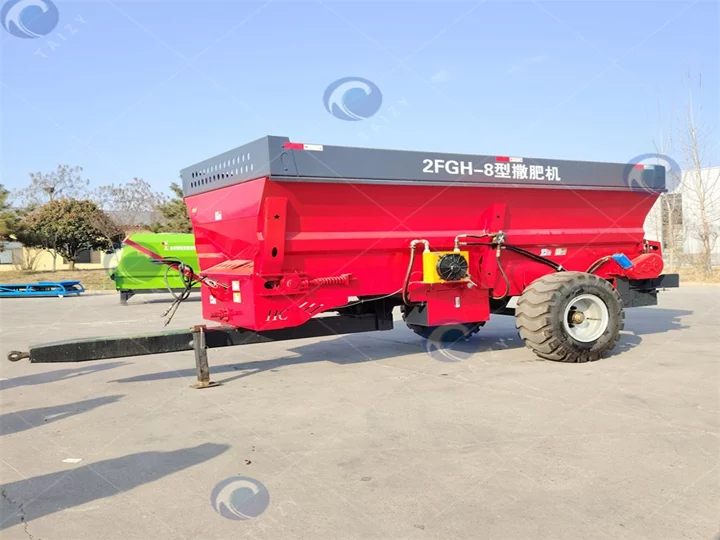
Manure Spreading Machine Exported to Canada for Efficient Farm Fertilization
A manure spreading machine was supplied to a farm customer in Canada to support more efficient handling and field application of solid organic fertilizer. The customer was looking for agricultural equipment that could distribute manure and compost more evenly while reducing the amount of manual spreading work required.
Based on the customer’s farming requirements, a tractor-pulled manure spreader was recommended as a practical solution for field fertilization and organic manure management.
Customer Requirements for Manure Spreading
The Canadian customer needed a machine that could handle solid organic fertilizer and distribute it across agricultural fields efficiently. Compared with manual manure spreading, mechanized equipment can help reduce labor requirements and provide more consistent material distribution.
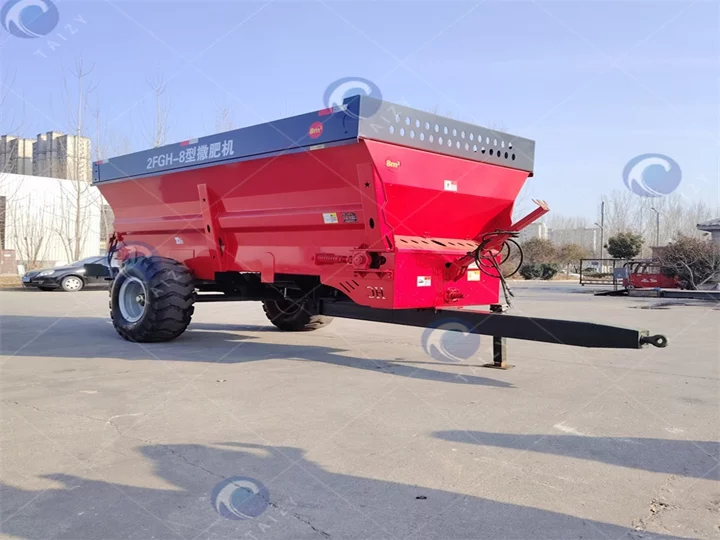
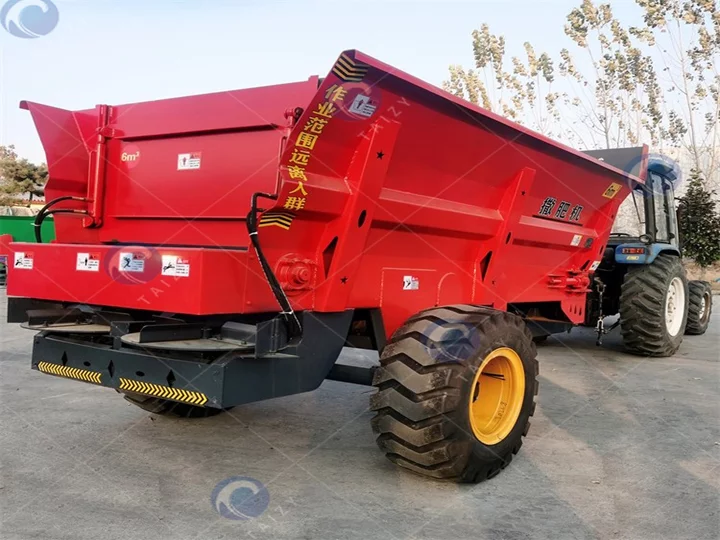
The customer also needed equipment suitable for tractor operation and capable of handling materials such as farmyard manure and compost. The manure spreader is designed for these applications and uses a hydraulic chain-floor feeding system to move material toward the rear spreading mechanism.
Manure Spreading Machine Selected for the Canadian Farm
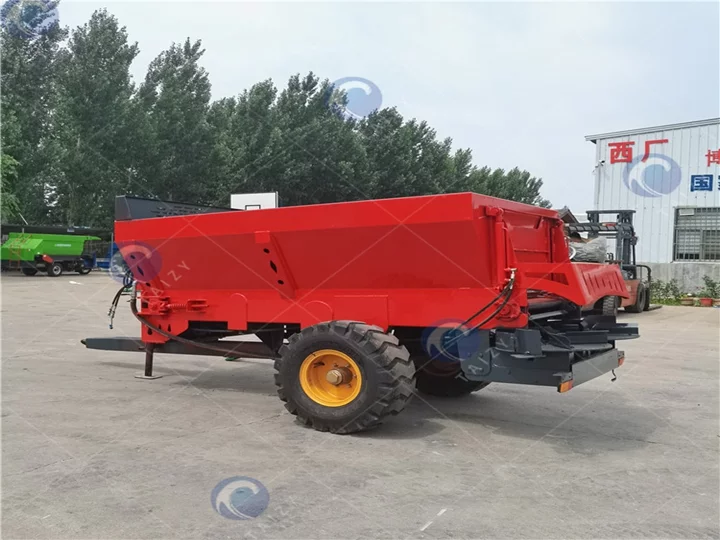
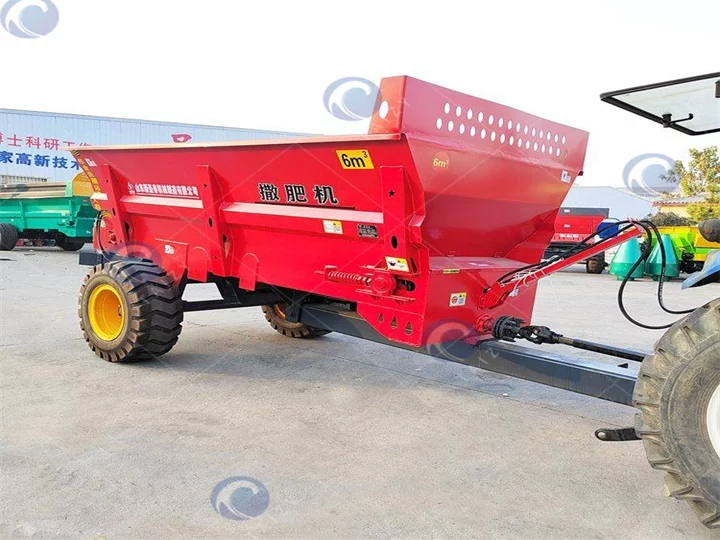
The manure spreading machine uses a heavy-duty hopper, hydraulic chain-floor feed, and rear-mounted spreading discs. The chain floor delivers manure toward the rear at an adjustable rate, while the rotating discs distribute the material across the field.
The available series includes 3 m³, 6 m³, and 8 m³ models, allowing the equipment to be matched with different farm sizes and tractor capacities. The 3 m³ model requires a tractor with at least 36.8 kW, while the 6 m³ and 8 m³ models require at least 60.3 kW.
For applications requiring a wider spreading range and better handling of clumpy or wet manure, a 6 m³ vertical-auger configuration is also available. Its listed spreading width is 5–12 m.
How the Manure Spreading Machine Works?
The working process is straightforward. Solid manure or compost is loaded into the hopper, and the hydraulic chain floor gradually moves the material toward the rear of the machine.
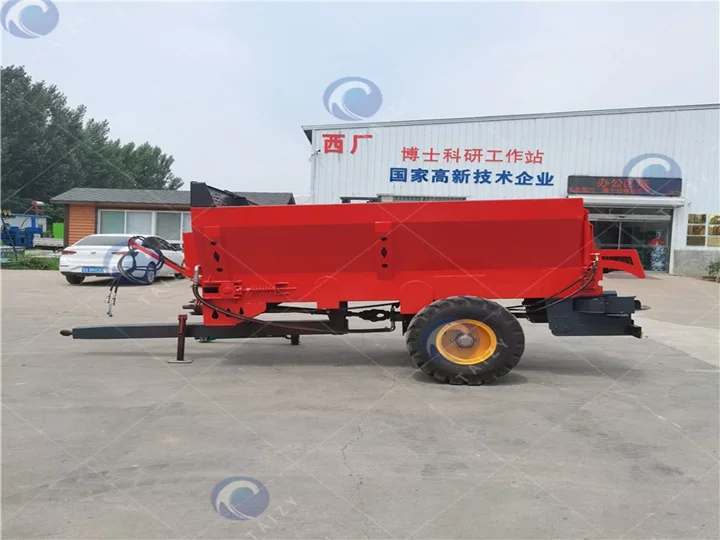
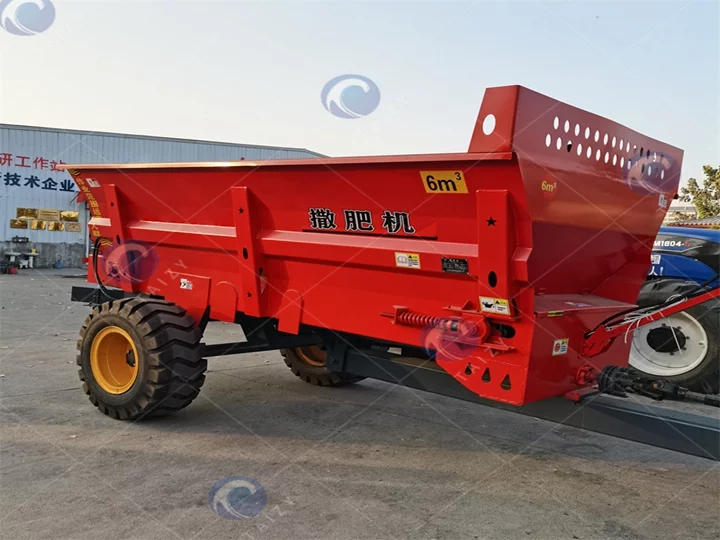
At the rear, the spreading mechanism breaks up and distributes the material across the field. The disc-type models use two rear-mounted discs and provide a spreading width of at least 5 m. The hydraulic feeding speed can be adjusted according to the material characteristics and application requirements.
This working principle allows the operator to complete manure application while driving the tractor through the field, reducing the need for repeated manual handling.
Benefits for the Customer
For the Canadian customer, mechanized manure spreading provides a more convenient alternative to manual fertilizer application. The tractor-powered design allows manure to be transported and distributed during the same field operation.
The hydraulic chain-floor feeding system also helps maintain a continuous material flow, while the rear dual-disc spreading system is designed to distribute manure over a relatively wide area. For farms handling different types of manure or compost, adjustable feeding and spreading settings provide additional operational flexibility.
Another advantage is the range of available capacities. Farmers can select a 3 m³, 6 m³, or 8 m³ configuration according to their field workload and tractor power.
Choosing the Right Manure Spreader for a Canadian Farm
When selecting a manure spreading machine, several factors should be considered.
- Manure type: Wet, dry, sticky, or clumpy materials can require different spreading configurations.
- Tractor power: The tractor must provide sufficient power for the selected spreader. The recommended minimum tractor power varies by model.
- Farm size: Smaller farms may consider a 3 m³ machine, while larger operations can consider 6 m³ or 8 m³ models.
- Required spreading width: Disc-type models offer a listed spreading width of at least 5 m, while the 6 m³ vertical-auger model offers a listed range of 5–12 m.
- Daily workload: The listed working efficiency is approximately 5–10 minutes per load, depending on the model and operating conditions.
Reliable Manure Spreading Solution for Canada
This Canadian project demonstrates how a tractor-pulled manure spreading machine can support more efficient organic fertilizer application on farms. With multiple capacities, hydraulic feeding, rear spreading mechanisms, and different configuration options, the machine can be matched to different manure types, tractor specifications, and field conditions.
For customers planning a manure management project, the suitable model can be selected according to tractor horsepower, manure type, field size, required spreading width, and daily workload.