
Square Bale vs. Round Bale: Key Differences in Straw Harvesting and Baling Machines
In the introduction of straw harvesting and baling machines, balers are generally divided into round balers and square balers. Each type has its own advantages in terms of bale shape, application scenarios, storage, and transportation. Below is a clear and practical comparison to help you choose the most suitable straw harvesting and baling machine for your needs.
Bale Shape and Working Principle
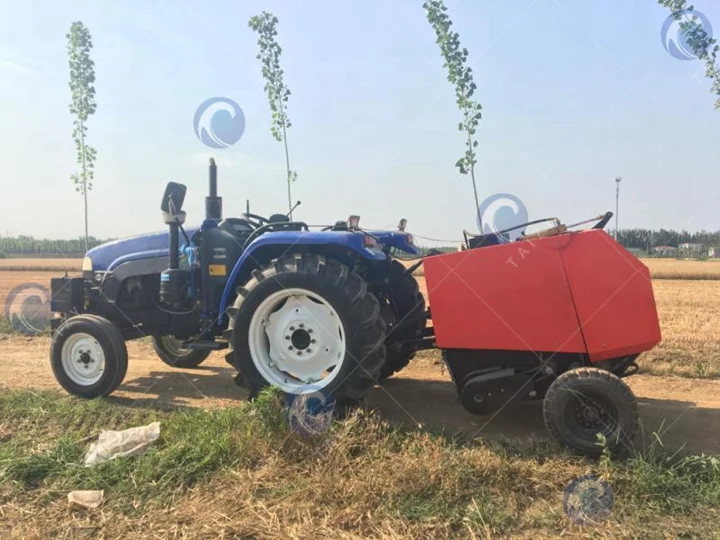
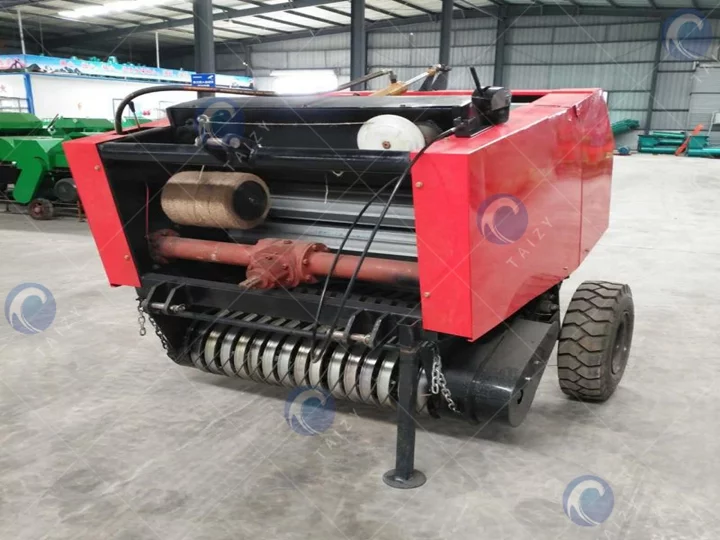
Round Bale Straw Harvesting and Baling Machine
- Produces cylindrical (round) bales.
- Uses net wrap or twine for binding, with a relatively simple mechanical structure.
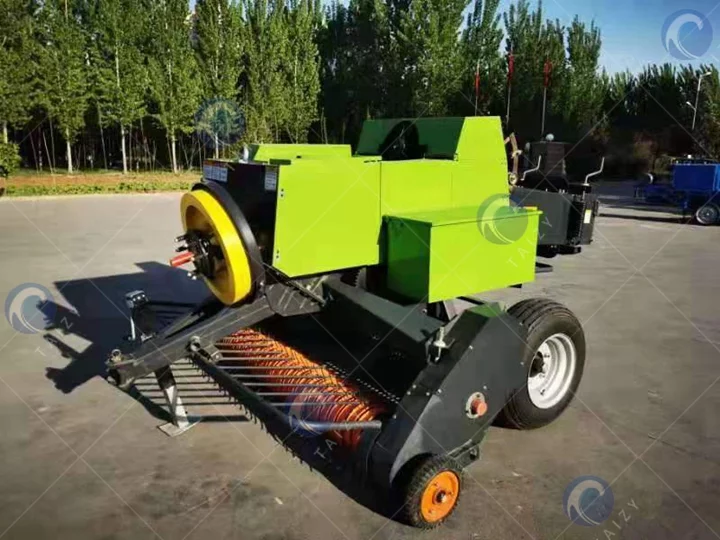
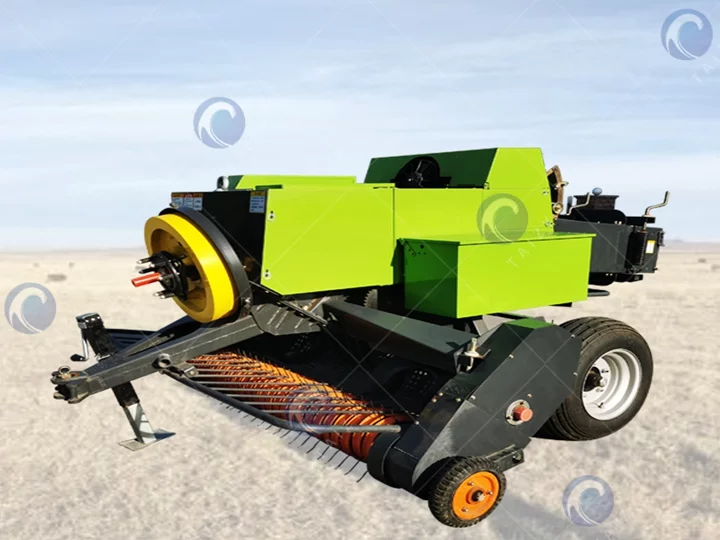
Square Bale Straw Harvesting and Baling Machine
- Produces rectangular or square bales with a regular shape.
- Usually tied with twine, and the structure is more complex compared to round balers.
Storage and Stacking Efficiency
Advantages of Square Bales
- The regular shape allows tight stacking, making full use of warehouse or storage space.
- More stable during loading and transportation, with no risk of rolling.
Characteristics of Round Bales
- More difficult to stack neatly, leaving gaps between bales and resulting in lower space utilization.
- More likely to roll when stored on uneven ground if not properly secured.
Moisture Resistance and Outdoor Storage
Round Bales Are Better for Outdoor Storage
- The curved surface allows rainwater to run off easily, reducing water penetration.
- Often wrapped with net or film, making them suitable for open-air storage.
Square Bales Are More Sensitive to Moisture
- Flat surfaces tend to retain water, increasing the risk of moisture absorption.
- Usually require dry warehouses or protective covers.
Loading, Transportation, and Logistics Efficiency
Square Bale Advantages
- Easy to stack on trucks, improving loading efficiency and reducing transportation costs.
- Ideal for large-scale operations and long-distance commercial straw transportation.
Round Bale Characteristics
- Larger individual volume and irregular shape lead to lower loading efficiency.
- Extra fixation is needed during transport to prevent rolling.
Working Efficiency and Machine Complexity
Round Bale Machines
- Simpler structure with fewer components.
- Easier operation and maintenance, with strong adaptability to different working conditions.
Square Bale Machines
- More complex mechanical systems with higher maintenance requirements.
- Provide higher bale density and better uniformity per unit volume.
Material Adaptability and End Use
Round Bale Straw Harvesting and Baling Machines Are Suitable For:
- Straw or forage with higher moisture content, such as silage.
- Small to medium farms or fields with irregular terrain.
Square Bale Straw Harvesting and Baling Machines Are Suitable For:
- Dry straw, hay, and materials with uniform length.
- Large-scale livestock farms, centralized feeding systems, and commercial straw trading.
Comparison Summary
| Item | Round Bale Machine | Square Bale Machine |
|---|---|---|
| Bale Shape | Cylindrical | Rectangular |
| Storage Efficiency | Medium | High |
| Outdoor Storage | Excellent | Average (needs cover) |
| Transportation | Needs anti-rolling measures | Easy stacking |
| Machine Complexity | Low | Higher |
| Maintenance | Easy | More demanding |
| Suitable Scale | Small to medium | Large-scale, commercial |
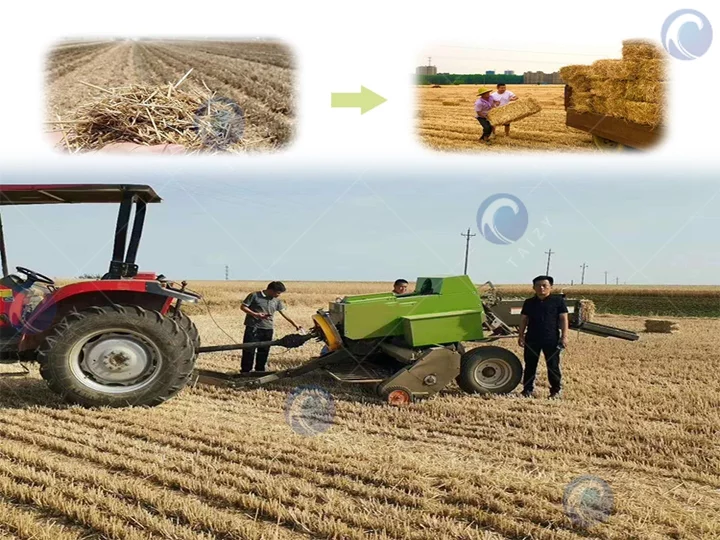
How to Choose the Right Straw Harvesting and Baling Machine?
- Choose a round bale straw harvesting and baling machine if you prioritize easy operation, lower maintenance, and reliable outdoor storage.
- Choose a square bale straw harvesting and baling machine if you focus on high storage efficiency, convenient transportation, and standardized bale management.
Selecting the right straw harvesting and baling machine ultimately depends on your field conditions, straw moisture level, storage method, and transportation requirements.